Distribution
About Winamp Distribution
Winamp Distribution allows you to distribute your music to over 35 online stores and streaming services, such as iTunes, Spotify, Apple Music, YouTube Music, Amazon, Deezer, Tidal, and many others.
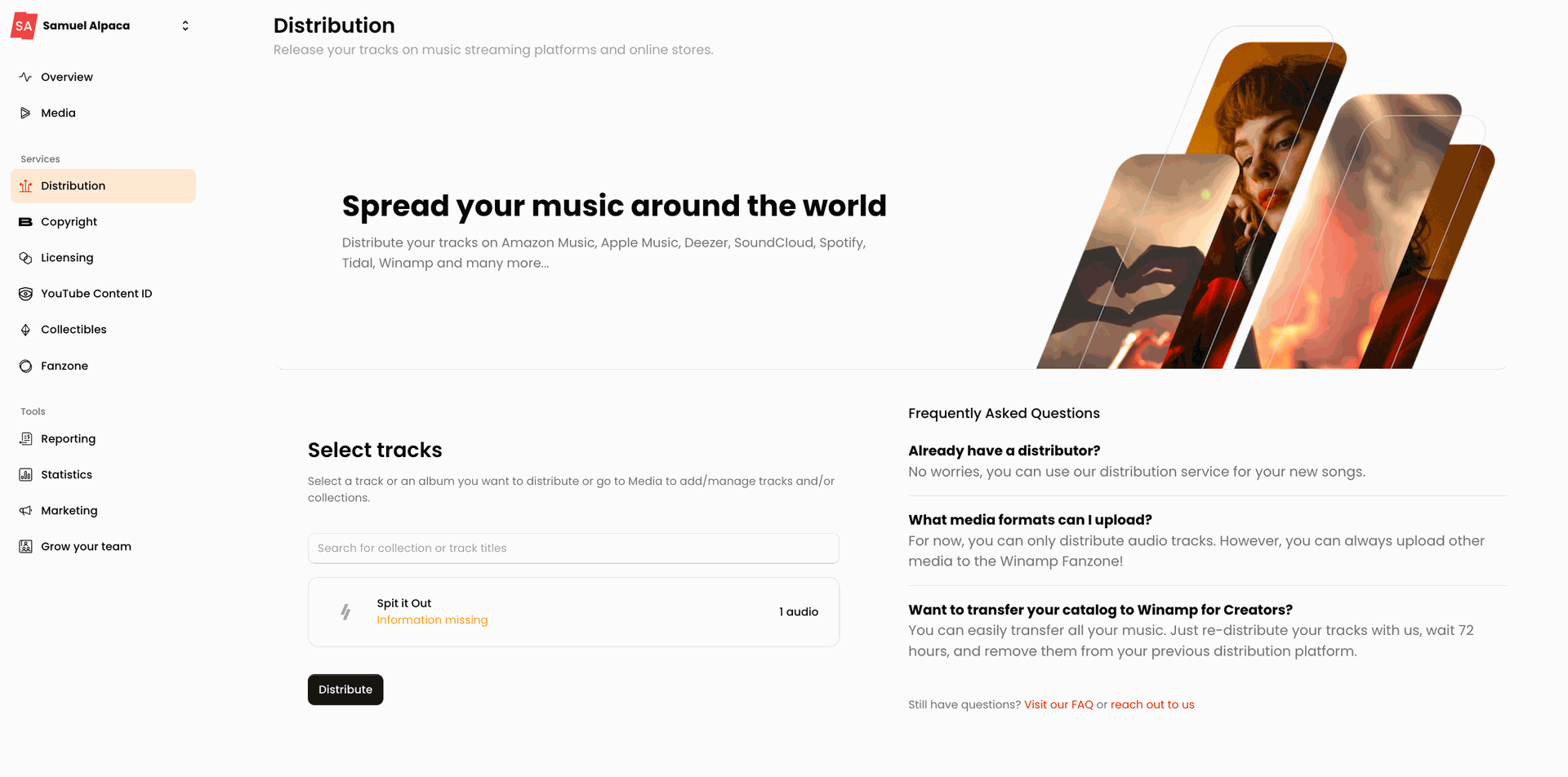
Available Stores & Streaming Platforms
Once distributed, your music will become available on the following streaming platforms and stores:
- 7 Digital
- Adaptr
- Amazon Music
- Anghami
- Apple Music
- Audible Magic
- AWA
- BMAT
- Boomplay
- Claro música
- Deezer
- Rights Manager
- Gracenote
- iHeart
- Jaxsta
- JioSaavn
- JOOX
- Kanjian
- KDigital Media
- Kkbox
- Lickd
- MixCloud
- NetEase
- Pandora
- Resso
- Rhapsody/Napster
- Soundcloud
- Spotify
- Tencent
- Tidal
- TikTok
- Twitch
- YouTube Music
Switching to Winamp Distribution
Already distributed your tracks elsewhere? Moving to Winamp Distribution has never been simpler — you can now import your Spotify catalog and metadata automatically.
Here’s what the process looks like:
- Import your catalog from Spotify
- Upload your audio files
- Wait for the copyright check to be processed
- Submit your tracks for distribution
- Take down your tracks from your previous provider
Win-Tip
When switching distribution providers, it's essential to use the same metadata, such as track titles, album names, ISRCs, and audio files that you had with your last distributor. This will help platforms like Spotify keep your play counts and playlists intact. We can't guarantee with 100% certainty that this will happen but we can provide you with the best guidance to ensure you're successful.
Be advised that you could lose any reviews you have on iTunes and Amazon.
Import Catalog from Spotify
If your music is already distributed and your catalog is present on Spotify, you can effortlessly transfer your catalog and metadata into Winamp for Creators, ensuring a smooth migration.
To import your catalog:
- Make sure that your identity is verified. Here is how you can check your identity status.
- Navigate to the Media of the Winamp for Creators Dashboard.
- If you haven't uploaded any tracks yet, you will see two boxes allowing you to choose whether you want to import your catalog or upload your audio files manually.
Click on Import catalog from Spotify.
- In the pop-up window, add the link to your Spotify profile or look up your profile by searching with your artist name and select it.

- The import process will start automatically and it will take a few minutes to complete.
- Once the process completes, your catalog and the metadata of your tracks will become available in the Media library and will get the following status: Missing Audio File. This means that you need to upload the corresponding audio file to the right track in your catalog.
- Upload the audio files by clicking on the track and clicking on Click to upload file. Your track will get a Processing status which means that we are trying to match the uploaded audio file against the imported metadata from your Spotify catalog, and run a Copyright Check.

- Once the audio file has been matched with the right track metadata, the track will be ready to be submitted to Distribution.
Win-Tip
Please note that this process doesn't include the import of the audio files, which means that you will still need to upload the corresponding audio file to the right track in your catalog.
Copyright Check
When you upload the audio files to the corresponding with track metadata, the tracks will automatically be checked for potential copyright infringement.
Your tracks will pass the copyright check if:
- Your legal name can be matched against your Spotify account
- The audio files you've uploaded match the metadata and duration imported from your catalog
Your tracks might receive a the copyright match if:
- Your legal name cannot be matched against your Spotify account.
-OR- - The audio files you upload for each imported track don't match the metadata or duration
In this case, you will likely get a Copyright Match Identified status.
Win-Tip
If you see a Copyright Match Identified message after uploading your tracks — don’t worry! This is completely normal for already distributed music.
Simply click “Contact Support” to challenge the match, and our team will step in to review and clear it within 48 hours. Acting quickly helps keep your releases live and your rights protected.
Getting Started with Winamp Distribution
To release your music with Winamp Distribution, start by uploading and publishing the tracks you want to submit via the Media in the Winamp artist dashboard and adding their metadata.
Check out this tutorial on how to upload your tracks in the Media Library.
Create your Release
- Go to the Distribution tab in your Winamp for Artists account and click Create release.
- Choose Single or Album/EP:
- Single: Select one track from your Media library.
- Album/EP: Select at least 4 tracks.
- Click Add audio and enter your release information, including the release name and whether it is a first release or re-release.
- Set your release date:
- Re-release: Enter the original release date and UPC/EAN code. You can also add a desired Winamp release date.
- First release: Add a desired release date, or leave it blank to release the music as soon as it has been processed by our team and distribution partners.
- Click Continue, then choose your Apple Music and Amazon pricing.
- Select the territories and platforms/stores where you want your release distributed, then click Continue.
- Enter the C-line (composition owner) and year of composition, and the P-line (master recording owner) and year of recording.
- Add your artwork if needed, then click Submit release.
Release your Music to Existing DSP Profiles
If you already have existing Artist Profiles on the various DSPs, make sure to add them to the Link Library of your Artist profile in Winamp for Artists so we can ensure that your Releases are delivered to the right profiles.
To add your links to the Link Library:
- Navigate to the Artists tab of your Account Workspace
- Select your artist.
- Click on Add distribution links.
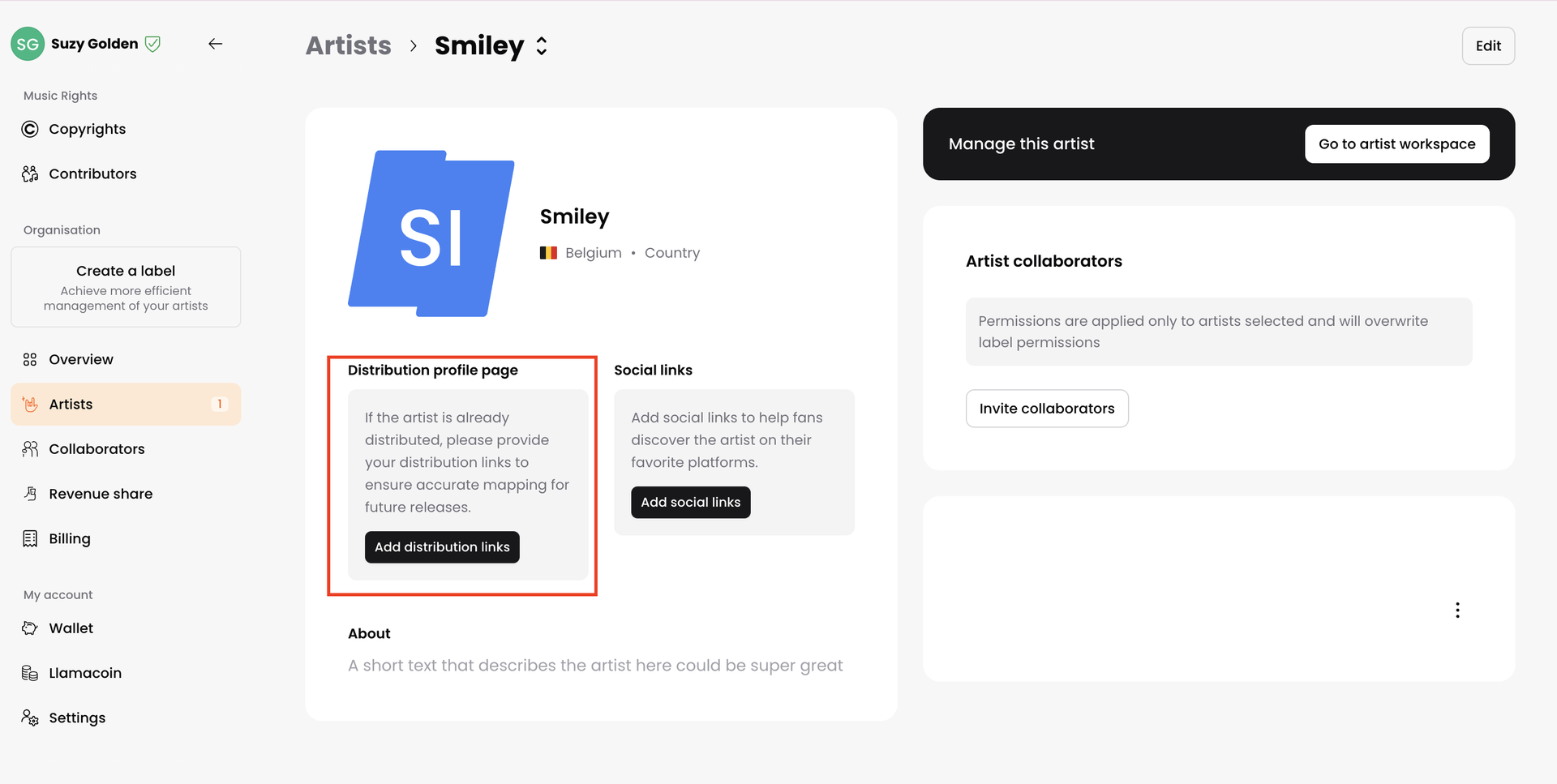
- From the pop-up, select Create new link.
- Add the links to your Artist profile on the various DSPs, and optionally, add the name of the link.
- Click Create.
Our team will use these links to distribute your works to the right profiles on all streaming platforms and stores.
Release your Music to Existing DSP Profiles
If you already have existing Artist Profiles on the various DSPs, make sure to add them to the Link Library of your Artist profile in Winamp for Artists so we can ensure that your Releases are delivered to the right profiles.
To add your links to the Link Library:
- Navigate to the Artists tab of your Account Workspace
- Select your artist.
- Click on Add distribution links.
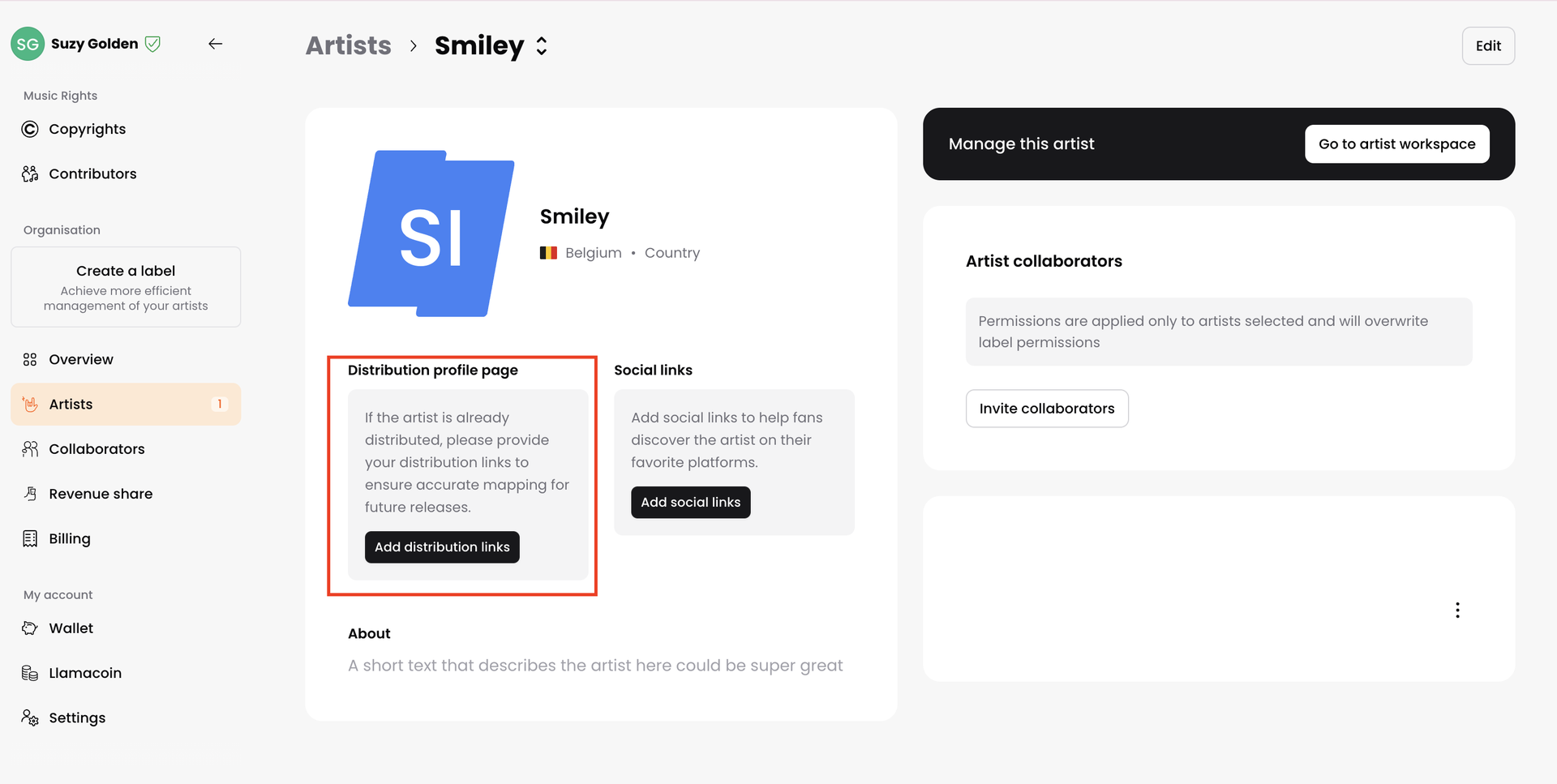
- From the pop-up, select Create new link.
- Add the links to your Artist profile on the various DSPs, and optionally, add the name of the link.
- Click Create.
Our team will use these links to distribute your works to the right profiles on all streaming platforms and stores.
Claim your Artist Profile on the DSPs
If you're distributing your music with Winamp for Creators for the first time, when your music is distributed to the DSPs, an artist profile will be created for you. Most DSPs will allow you to claim ownership of you artist profile. Check out this article to find out how to gain access to your artist profiles.
Music Assigned to Wrong Artist Profile
Since channels are the ones that automatically assign releases to artist profiles, when a release is distributed, it may happen that it is assigned to an incorrect artist profile.
It can also happen that the channel creates a new artist profile, when a previous correct one already existed. These incidents usually occur with artist profiles with identical or similar names, as channels create and organize them automatically.
Requesting Transfer to a New Profile
Some channels have enabled the option to request a new profile or relocate their content from their own applications, while others can be contacted through Winamp.
- Amazon: Create an account on the Amazon Music for Artists platform (it doesn't matter if the artists are already verified or not). Afterwards Fill in the form https://artists.amazon.com/reportArtistProfile.
- Apple Music: Create an Apple ID (it doesn't matter if the artists are already verified or not. In the second case, it will help them to get verified later). Afterwards fill in the form https://artists.apple.com/contact-us.
- Spotify: If you have their own and/or verified profile) fill in the form https://artists.spotify.com/c/content-mismatch or If they do not have their own and/or verified profile https://artists.spotify.com/es/contact.
- Boomplay: Fill in the form https://www.boomplay.com/artist-center/faq/releases/music-under-the-wrong-profile.
- Deezer: Fill in the form https://creatorsupport.deezer.com/hc/en-us/requests/new.
If you need to relocate your content or create a new profile which do not manage the modifications independently you can reach out to us.
As soon as we received the information, we’ll contact the channels directly and ask them to solve the misunderstanding.
Release Takedown
You can request a take-down of your release by navigating to the Distribution tab and clicking the release.
In the top right corner of the screen, you will see a "Take Down" button. Clicking on it will trigger the take-down process that might take a few days to be completed.

lYour top questions answered
After submitting your release, it can take up to 10 business days for it to be reviewed, processed, and prepared for distribution. This review period ensures that the content meets quality standards and is properly set up for delivery to DSPs (digital streaming platforms).
If you've already distributed your music using Winamp Distribution, you aren't able to change your track's metadata, including your artwork because it is already being used by the DSPs to which your track is distributed.
Your release will be rejected only if it doesn't meet the eligibility criteria outlined in the Eligibility Criteria section of this guide.
Your releases should normally be published to the DSP profiles you've added in your Winamp for Creators account.
If your music is released for the first time, try looking your music up on the major streaming platforms once the release status changes to "Released" in your Winamp for Creators dashboard.
If you need help locating your DSP profiles, don't hesitate to request assistance from our Support Team here.
As channels are the ones that automatically assign releases to artist profiles, when a release is distributed, it may happen that it is assigned to an incorrect artist profile.
It can also happen that the channel creates a new artist profile, when a previous correct one already existed. These incidents usually occur with artist profiles with identical or similar names, as channels create and organize them automatically.
Click here to learn how to claim your DSP profile or get your profiles merged.
To learn how to claim your artist profile on the major DSPs, click here